0
0

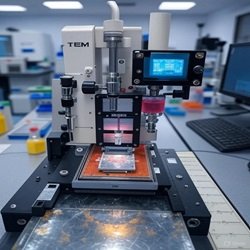
Transmission Electron Microscopy (TEM) is a high-resolution imaging technique that uses an electron beam transmitted through an ultra-thin specimen to produce detailed images at the atomic and nanometer scale. In repair studies, TEM is indispensable for analyzing microstructural defects, material degradation, and repair mechanisms in metals, polymers, ceramics, and biological samples.
Principle
A high-energy electron beam passes through a thin sample.
Variations in electron scattering generate contrast, revealing internal microstructures, crystal defects, and interfaces.
Capable of magnifications up to millions of times, TEM reveals features undetectable by light microscopy.
Applications in Repair Studies
Failure analysis: Identifying cracks, voids, and dislocations in repaired components.
Material evaluation: Observing grain boundaries and phase changes after repair treatments (e.g., welding, heat treatment).
Nanostructure analysis: Studying repaired coatings, thin films, and composites at atomic resolution.
Biological repairs: Examining cellular or tissue-level healing mechanisms in biomedical research.
Importance
TEM provides unparalleled insights into the success and durability of repairs, helping researchers and engineers optimize repair strategies, material performance, and quality assurance in industries such as aerospace, electronics, nanotechnology, and medical devices.

Online Payment
Sent to Email
Secure and reliable laboratory testing services, fast turnaround.