0
0

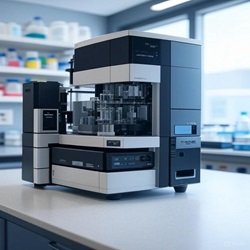
High-Performance Liquid Chromatography (HPLC) is a versatile analytical technique used to separate, identify, and quantify components in liquid samples. It is widely applied in pharmaceuticals, food and beverage quality control, environmental testing, and biochemical research due to its high precision, speed, and reproducibility.
Principle
HPLC operates by passing a liquid sample through a column packed with a stationary phase under high pressure. The compounds in the sample interact differently with the stationary phase, leading to separation based on polarity, size, or chemical affinity. Detection is typically done using UV-Vis, fluorescence, or mass spectrometric detectors.
Key Features
High resolution and sensitivity for complex mixtures.
Applicable to thermally unstable and non-volatile compounds.
Quantitative and qualitative capabilities in a single analysis.
Multiple modes available: Reverse-phase, Normal-phase, Ion-exchange, and Size-exclusion HPLC.
Applications
Pharmaceuticals: Drug purity testing, dosage formulation, and bioequivalence studies.
Food and beverage industry: Analyzing vitamins, additives, and contaminants.
Clinical diagnostics: Monitoring biomarkers and therapeutic drugs in biological fluids.
Environmental analysis: Detecting pesticides and organic pollutants in water and soil.
Biochemistry: Separation of amino acids, peptides, and nucleotides.
HPLC remains a cornerstone in modern analytical laboratories, offering accuracy, reproducibility, and compliance with global regulatory standards (USP, ISO, ICH).

Online Payment
Sent to Email
Secure and reliable laboratory testing services, fast turnaround.