0
0

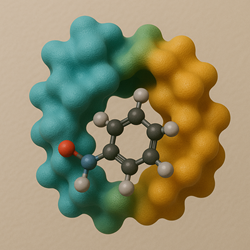
Molecular docking is a computational modeling technique used to predict how a small molecule (ligand) interacts with a target macromolecule (typically a protein or nucleic acid) at the atomic level. It plays a central role in drug discovery, structural biology, and computational chemistry by providing insights into binding affinity, interaction mechanisms, and potential inhibitory activity of compounds.
The process involves predicting the optimal binding orientation of a ligand within the active site of a target protein, followed by scoring to estimate the strength and stability of the interaction. Docking results help researchers identify lead compounds for drug development and optimize their structure–activity relationships (SAR).
Applications include:
Pharmaceutical research: Identifying potential drug candidates and repurposing existing drugs.
Agricultural biotechnology: Designing pesticides or insecticides targeting specific enzymes in pests.
Environmental studies: Modeling pollutant–protein interactions for toxicity assessments.
Structural biology: Understanding enzyme mechanisms and protein–ligand dynamics.
Molecular docking is often combined with molecular dynamics simulations, ADMET profiling, and QSAR studies to provide a comprehensive view of ligand efficacy and safety, making it a cornerstone of in silico drug discovery pipelines.

Online & Pay on Delivery options for your convenience.
Receive your result via Email, Hard Copy, or Dispatch.
Secure and reliable laboratory testing services, fast turnaround.