0
0

Tensile strength is a fundamental mechanical property that measures the maximum stress a material can withstand while being stretched or pulled before breaking. It is one of the most critical parameters in material science, engineering, and quality control, providing insight into a material’s durability, elasticity, and suitability for structural applications.
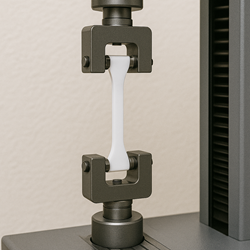
In tensile testing, a specimen is subjected to a controlled pulling force using a universal testing machine (UTM) until failure occurs. The test generates a stress-strain curve, from which key properties such as yield strength, ultimate tensile strength (UTS), and elongation at break are derived.
Applications of tensile strength analysis include:
Metals and alloys: Evaluating structural integrity for construction, automotive, and aerospace industries.
Polymers and plastics: Assessing flexibility, toughness, and performance under stress.
Fibers and textiles: Measuring durability for industrial and consumer use.
Composite materials: Ensuring reliability in advanced engineering and defense applications.
Tensile strength testing ensures materials meet international standards (ASTM, ISO) and helps engineers select the right material for specific loads, safety factors, and environmental conditions.

Online Payment
Sent to Email
Secure and reliable laboratory testing services, fast turnaround.