0
0

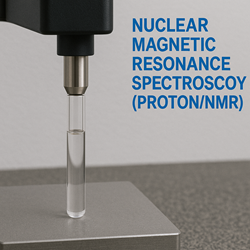
Nuclear Magnetic Resonance Spectroscopy (Proton/NMR): Principle and Applications
Nuclear Magnetic Resonance (NMR) Spectroscopy, specifically Proton NMR (¹H NMR), is a powerful analytical technique used to determine the structure, purity, and molecular dynamics of organic and biochemical compounds. It relies on the interaction of hydrogen nuclei (protons) with a strong magnetic field and radiofrequency radiation, producing detailed spectra that reveal chemical environments, connectivity, and functional groups within a molecule.
In proton NMR, each hydrogen atom in a compound resonates at a characteristic frequency based on its chemical surroundings. This allows scientists to identify molecular frameworks, substituent positions, and stereochemistry, making it invaluable for drug development, polymer studies, natural product research, and quality control in pharmaceuticals and chemicals.
Key advantages of NMR include its non-destructive nature, high accuracy, and ability to analyze mixtures without prior separation, making it a cornerstone technique in organic chemistry, biochemistry, and materials science.

Online Payment
Receive your result via Email, Hard Copy, or Dispatch.
Secure and reliable laboratory testing services, fast turnaround.