0
0

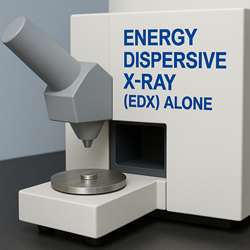
Energy Dispersive X-ray (EDX) spectroscopy is an analytical technique used to determine the elemental composition of materials. It works by detecting characteristic X-rays emitted from a sample when it is bombarded with an electron beam, typically in combination with a Scanning Electron Microscope (SEM) or Transmission Electron Microscope (TEM).
When the high-energy electrons strike the sample, inner-shell electrons of the atoms are ejected, and outer-shell electrons fall into the vacant positions, releasing X-rays with energies unique to each element. By measuring these X-rays, EDX provides qualitative and semi-quantitative elemental analysis across a wide range of materials, including metals, ceramics, polymers, and geological samples.
Key applications include:
Material characterization: Identifying elements and mapping their distribution in microstructures.
Failure analysis: Detecting contamination or inclusions in industrial products.
Environmental studies: Analyzing particles, dust, or soil for elemental content.
Nanotechnology and metallurgy: Studying composition of thin films, alloys, and nanoparticles.
EDX is valued for its rapid analysis, minimal sample preparation, and compatibility with microscopic imaging, making it a standard tool in research, quality control, and forensic investigations.

Online Payment
Sent to Email
Secure and reliable laboratory testing services, fast turnaround.